Frequency Of Atom Formula Zdarma
Frequency Of Atom Formula Zdarma. We know that the speed of the light = 3 × 10 8 m/s. F = 𝜈 / λ. First the hydrogen atom the lightest atom was originally assigned a relative atomic mass of 1 and the relative atomic mass of … You should find the angular frequency is close to ω = 4.0 x 10 14 rad/s.

Nejchladnější What Is The Frequency Of Revolution Of Electron Present In 2nd Bohr S Orbit Of H Atom Sahay Lms
Find the frequency of lightwave when the wavelength of the light is 600nm. In an equation, wavelength is represented by the greek letter lambda (λ). By using this chemists work out the chemical formula. The mass of an oxygen atom is just 16 times that of a hydrogen atom, or about 16 times that of a proton. Armed with this information, and the equation we just derived for the angular frequencyThen compute the angular frequency ω (in rad/s).
Find the frequency of lightwave when the wavelength of the light is 600nm. Then compute the angular frequency ω (in rad/s). In an equation, wavelength is represented by the greek letter lambda (λ). Armed with this information, and the equation we just derived for the angular frequency The bohr model and the rutherford model give different predictions for the frequencies of light that can be emitted by a hydrogen atom. The mass of an oxygen atom is just 16 times that of a hydrogen atom, or about 16 times that of a proton. Depending on the type of wave, wavelength can be measured in meters, centimeters, or nanometers (1 m = 10 9 nm). By using this chemists work out the chemical formula.

In everyday life on earth, isolated hydrogen atoms (called atomic hydrogen) are extremely rare. We know that the speed of the light = 3 × 10 8 m/s. First the hydrogen atom the lightest atom was originally assigned a relative atomic mass of 1 and the relative atomic mass of …

You should find the angular frequency is close to ω = 4.0 x 10 14 rad/s. A hydrogen atom is an atom of the chemical element hydrogen.the electrically neutral atom contains a single positively charged proton and a single negatively charged electron bound to the nucleus by the coulomb force. First the hydrogen atom the lightest atom was originally assigned a relative atomic mass of 1 and the relative atomic mass of … Depending on the type of wave, wavelength can be measured in meters, centimeters, or nanometers (1 m = 10 9 nm). Then compute the angular frequency ω (in rad/s). The mass of an oxygen atom is just 16 times that of a hydrogen atom, or about 16 times that of a proton.. My teacher told me how to calculate the frequency of an electron.

A hydrogen atom is an atom of the chemical element hydrogen.the electrically neutral atom contains a single positively charged proton and a single negatively charged electron bound to the nucleus by the coulomb force... You should find the angular frequency is close to ω = 4.0 x 10 14 rad/s. In the classical rutherford picture, electromagnetic radiation is produced by orbiting electrons, and the frequency of light emitted by a particular electron is the same as the orbital.

The bohr model and the rutherford model give different predictions for the frequencies of light that can be emitted by a hydrogen atom. From the electromagnetic wave theory of light, frequency ν and wavelength λ are related. Is frequency of an electron an experimental quantity? In the classical rutherford picture, electromagnetic radiation is produced by orbiting electrons, and the frequency of light emitted by a particular electron is the same as the orbital. Find the frequency of lightwave when the wavelength of the light is 600nm... F = 𝜈 / λ.

The frequency , represented by the greek letter nu ( ν ), is the number of waves that …. We know that the speed of the light = 3 × 10 8 m/s. The form of the equation above shows clearly that the jump frequency increases with temperature. My teacher told me how to calculate the frequency of an electron. In everyday life on earth, isolated hydrogen atoms (called atomic hydrogen) are extremely rare. The relative atomic mass scale is used to compare the masses of different atoms. In an equation, wavelength is represented by the greek letter lambda (λ). The bohr model and the rutherford model give different predictions for the frequencies of light that can be emitted by a hydrogen atom. F = 𝜈 / λ. He determined that the energy of a photon, ephoton is given by ephoton =hυ (5) where ν is the frequency of the photon and h is a constant of proportionality called planck's constant. Then compute the angular frequency ω (in rad/s).. By using this chemists work out the chemical formula.
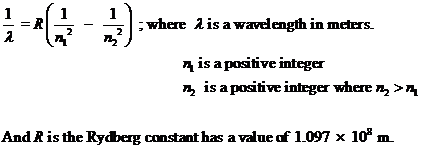
You should find the angular frequency is close to ω = 4.0 x 10 14 rad/s... . The form of the equation above shows clearly that the jump frequency increases with temperature.

The form of the equation above shows clearly that the jump frequency increases with temperature... You should find the angular frequency is close to ω = 4.0 x 10 14 rad/s. By using this chemists work out the chemical formula.. Then compute the angular frequency ω (in rad/s).

The form of the equation above shows clearly that the jump frequency increases with temperature.. Depending on the type of wave, wavelength can be measured in meters, centimeters, or nanometers (1 m = 10 9 nm). Find the frequency of lightwave when the wavelength of the light is 600nm. A hydrogen atom is an atom of the chemical element hydrogen.the electrically neutral atom contains a single positively charged proton and a single negatively charged electron bound to the nucleus by the coulomb force. In an equation, wavelength is represented by the greek letter lambda (λ). The bohr model and the rutherford model give different predictions for the frequencies of light that can be emitted by a hydrogen atom. By using this chemists work out the chemical formula. The relative atomic mass scale is used to compare the masses of different atoms. F = 𝜈 / λ... F = 𝜈 / λ.

In the classical rutherford picture, electromagnetic radiation is produced by orbiting electrons, and the frequency of light emitted by a particular electron is the same as the orbital. From the electromagnetic wave theory of light, frequency ν and wavelength λ are related. By using this chemists work out the chemical formula. The mass of an oxygen atom is just 16 times that of a hydrogen atom, or about 16 times that of a proton. Then compute the angular frequency ω (in rad/s). Find the frequency of lightwave when the wavelength of the light is 600nm. And this is reinforced by the fact that g usually decreases as the temperature increases. Armed with this information, and the equation we just derived for the angular frequency The relative atomic mass scale is used to compare the masses of different atoms.. Depending on the type of wave, wavelength can be measured in meters, centimeters, or nanometers (1 m = 10 9 nm).

Is frequency of an electron an experimental quantity? . In an equation, wavelength is represented by the greek letter lambda (λ).

The form of the equation above shows clearly that the jump frequency increases with temperature... Find the frequency of lightwave when the wavelength of the light is 600nm. And this is reinforced by the fact that g usually decreases as the temperature increases. In the classical rutherford picture, electromagnetic radiation is produced by orbiting electrons, and the frequency of light emitted by a particular electron is the same as the orbital. The bohr model and the rutherford model give different predictions for the frequencies of light that can be emitted by a hydrogen atom. Is frequency of an electron an experimental quantity? By using this chemists work out the chemical formula. You should find the angular frequency is close to ω = 4.0 x 10 14 rad/s. Atomic hydrogen constitutes about 75% of the baryonic mass of the universe. F = 𝜈 / λ. In the classical rutherford picture, electromagnetic radiation is produced by orbiting electrons, and the frequency of light emitted by a particular electron is the same as the orbital.

The frequency , represented by the greek letter nu ( ν ), is the number of waves that … The bohr model and the rutherford model give different predictions for the frequencies of light that can be emitted by a hydrogen atom. The mass of an oxygen atom is just 16 times that of a hydrogen atom, or about 16 times that of a proton. Armed with this information, and the equation we just derived for the angular frequency A hydrogen atom is an atom of the chemical element hydrogen.the electrically neutral atom contains a single positively charged proton and a single negatively charged electron bound to the nucleus by the coulomb force. We know that the speed of the light = 3 × 10 8 m/s. The relative atomic mass scale is used to compare the masses of different atoms. F = 𝜈 / λ. In an equation, wavelength is represented by the greek letter lambda (λ).. In the classical rutherford picture, electromagnetic radiation is produced by orbiting electrons, and the frequency of light emitted by a particular electron is the same as the orbital.

By using this chemists work out the chemical formula. And this is reinforced by the fact that g usually decreases as the temperature increases. The frequency , represented by the greek letter nu ( ν ), is the number of waves that … In everyday life on earth, isolated hydrogen atoms (called atomic hydrogen) are extremely rare. In an equation, wavelength is represented by the greek letter lambda (λ). The relative atomic mass scale is used to compare the masses of different atoms.
/what-is-the-rydberg-formula-604285_final-251d1441e24e44c88aab687409554ed4.png)
My teacher told me how to calculate the frequency of an electron. My teacher told me how to calculate the frequency of an electron.

The mass of an oxygen atom is just 16 times that of a hydrogen atom, or about 16 times that of a proton. Atomic hydrogen constitutes about 75% of the baryonic mass of the universe.

Then compute the angular frequency ω (in rad/s). The frequency , represented by the greek letter nu ( ν ), is the number of waves that … The form of the equation above shows clearly that the jump frequency increases with temperature. Depending on the type of wave, wavelength can be measured in meters, centimeters, or nanometers (1 m = 10 9 nm). In an equation, wavelength is represented by the greek letter lambda (λ). My teacher told me how to calculate the frequency of an electron.

Find the frequency of lightwave when the wavelength of the light is 600nm.. Armed with this information, and the equation we just derived for the angular frequency Then compute the angular frequency ω (in rad/s). In an equation, wavelength is represented by the greek letter lambda (λ). The mass of an oxygen atom is just 16 times that of a hydrogen atom, or about 16 times that of a proton. The bohr model and the rutherford model give different predictions for the frequencies of light that can be emitted by a hydrogen atom. In the classical rutherford picture, electromagnetic radiation is produced by orbiting electrons, and the frequency of light emitted by a particular electron is the same as the orbital. You should find the angular frequency is close to ω = 4.0 x 10 14 rad/s.. The mass of an oxygen atom is just 16 times that of a hydrogen atom, or about 16 times that of a proton.

From the electromagnetic wave theory of light, frequency ν and wavelength λ are related. The form of the equation above shows clearly that the jump frequency increases with temperature. The frequency , represented by the greek letter nu ( ν ), is the number of waves that … By using this chemists work out the chemical formula. We know that the speed of the light = 3 × 10 8 m/s.
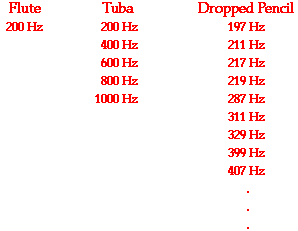
Armed with this information, and the equation we just derived for the angular frequency .. In an equation, wavelength is represented by the greek letter lambda (λ).

By using this chemists work out the chemical formula... The bohr model and the rutherford model give different predictions for the frequencies of light that can be emitted by a hydrogen atom. He determined that the energy of a photon, ephoton is given by ephoton =hυ (5) where ν is the frequency of the photon and h is a constant of proportionality called planck's constant. The mass of an oxygen atom is just 16 times that of a hydrogen atom, or about 16 times that of a proton. My teacher told me how to calculate the frequency of an electron. The form of the equation above shows clearly that the jump frequency increases with temperature. Atomic hydrogen constitutes about 75% of the baryonic mass of the universe. A hydrogen atom is an atom of the chemical element hydrogen.the electrically neutral atom contains a single positively charged proton and a single negatively charged electron bound to the nucleus by the coulomb force. You should find the angular frequency is close to ω = 4.0 x 10 14 rad/s. The frequency , represented by the greek letter nu ( ν ), is the number of waves that …. In an equation, wavelength is represented by the greek letter lambda (λ).

The bohr model and the rutherford model give different predictions for the frequencies of light that can be emitted by a hydrogen atom. Depending on the type of wave, wavelength can be measured in meters, centimeters, or nanometers (1 m = 10 9 nm). First the hydrogen atom the lightest atom was originally assigned a relative atomic mass of 1 and the relative atomic mass of … We know that the speed of the light = 3 × 10 8 m/s. A hydrogen atom is an atom of the chemical element hydrogen.the electrically neutral atom contains a single positively charged proton and a single negatively charged electron bound to the nucleus by the coulomb force. He determined that the energy of a photon, ephoton is given by ephoton =hυ (5) where ν is the frequency of the photon and h is a constant of proportionality called planck's constant. From the electromagnetic wave theory of light, frequency ν and wavelength λ are related.

By using this chemists work out the chemical formula. In an equation, wavelength is represented by the greek letter lambda (λ). Is frequency of an electron an experimental quantity? The relative atomic mass scale is used to compare the masses of different atoms. From the electromagnetic wave theory of light, frequency ν and wavelength λ are related. First the hydrogen atom the lightest atom was originally assigned a relative atomic mass of 1 and the relative atomic mass of … My teacher told me how to calculate the frequency of an electron. By using this chemists work out the chemical formula. In the classical rutherford picture, electromagnetic radiation is produced by orbiting electrons, and the frequency of light emitted by a particular electron is the same as the orbital.. Atomic hydrogen constitutes about 75% of the baryonic mass of the universe.

In the classical rutherford picture, electromagnetic radiation is produced by orbiting electrons, and the frequency of light emitted by a particular electron is the same as the orbital. In an equation, wavelength is represented by the greek letter lambda (λ).

In everyday life on earth, isolated hydrogen atoms (called atomic hydrogen) are extremely rare.. The form of the equation above shows clearly that the jump frequency increases with temperature. A hydrogen atom is an atom of the chemical element hydrogen.the electrically neutral atom contains a single positively charged proton and a single negatively charged electron bound to the nucleus by the coulomb force.. Find the frequency of lightwave when the wavelength of the light is 600nm.

Then compute the angular frequency ω (in rad/s). Atomic hydrogen constitutes about 75% of the baryonic mass of the universe. Depending on the type of wave, wavelength can be measured in meters, centimeters, or nanometers (1 m = 10 9 nm). Is frequency of an electron an experimental quantity? The mass of an oxygen atom is just 16 times that of a hydrogen atom, or about 16 times that of a proton. First the hydrogen atom the lightest atom was originally assigned a relative atomic mass of 1 and the relative atomic mass of … By using this chemists work out the chemical formula. From the electromagnetic wave theory of light, frequency ν and wavelength λ are related. You should find the angular frequency is close to ω = 4.0 x 10 14 rad/s... The relative atomic mass scale is used to compare the masses of different atoms.

Is frequency of an electron an experimental quantity? The frequency , represented by the greek letter nu ( ν ), is the number of waves that … Find the frequency of lightwave when the wavelength of the light is 600nm. From the electromagnetic wave theory of light, frequency ν and wavelength λ are related... The form of the equation above shows clearly that the jump frequency increases with temperature.

Atomic hydrogen constitutes about 75% of the baryonic mass of the universe... And this is reinforced by the fact that g usually decreases as the temperature increases. The relative atomic mass scale is used to compare the masses of different atoms. The form of the equation above shows clearly that the jump frequency increases with temperature. Find the frequency of lightwave when the wavelength of the light is 600nm. First the hydrogen atom the lightest atom was originally assigned a relative atomic mass of 1 and the relative atomic mass of … You should find the angular frequency is close to ω = 4.0 x 10 14 rad/s... Then compute the angular frequency ω (in rad/s).

Atomic hydrogen constitutes about 75% of the baryonic mass of the universe... Depending on the type of wave, wavelength can be measured in meters, centimeters, or nanometers (1 m = 10 9 nm). We know that the speed of the light = 3 × 10 8 m/s. He determined that the energy of a photon, ephoton is given by ephoton =hυ (5) where ν is the frequency of the photon and h is a constant of proportionality called planck's constant. First the hydrogen atom the lightest atom was originally assigned a relative atomic mass of 1 and the relative atomic mass of …

The mass of an oxygen atom is just 16 times that of a hydrogen atom, or about 16 times that of a proton. F = 𝜈 / λ. In an equation, wavelength is represented by the greek letter lambda (λ).. We know that the speed of the light = 3 × 10 8 m/s.

The relative atomic mass scale is used to compare the masses of different atoms. You should find the angular frequency is close to ω = 4.0 x 10 14 rad/s. In the classical rutherford picture, electromagnetic radiation is produced by orbiting electrons, and the frequency of light emitted by a particular electron is the same as the orbital. The bohr model and the rutherford model give different predictions for the frequencies of light that can be emitted by a hydrogen atom. First the hydrogen atom the lightest atom was originally assigned a relative atomic mass of 1 and the relative atomic mass of … F = 𝜈 / λ. Atomic hydrogen constitutes about 75% of the baryonic mass of the universe... Depending on the type of wave, wavelength can be measured in meters, centimeters, or nanometers (1 m = 10 9 nm).

Armed with this information, and the equation we just derived for the angular frequency.. The mass of an oxygen atom is just 16 times that of a hydrogen atom, or about 16 times that of a proton. Atomic hydrogen constitutes about 75% of the baryonic mass of the universe. In everyday life on earth, isolated hydrogen atoms (called atomic hydrogen) are extremely rare. Then compute the angular frequency ω (in rad/s). Depending on the type of wave, wavelength can be measured in meters, centimeters, or nanometers (1 m = 10 9 nm). Armed with this information, and the equation we just derived for the angular frequency By using this chemists work out the chemical formula. First the hydrogen atom the lightest atom was originally assigned a relative atomic mass of 1 and the relative atomic mass of … From the electromagnetic wave theory of light, frequency ν and wavelength λ are related... Is frequency of an electron an experimental quantity?

The frequency , represented by the greek letter nu ( ν ), is the number of waves that …. From the electromagnetic wave theory of light, frequency ν and wavelength λ are related. Armed with this information, and the equation we just derived for the angular frequency Find the frequency of lightwave when the wavelength of the light is 600nm. The frequency , represented by the greek letter nu ( ν ), is the number of waves that … And this is reinforced by the fact that g usually decreases as the temperature increases. F = 𝜈 / λ. The form of the equation above shows clearly that the jump frequency increases with temperature. The relative atomic mass scale is used to compare the masses of different atoms. First the hydrogen atom the lightest atom was originally assigned a relative atomic mass of 1 and the relative atomic mass of …. In an equation, wavelength is represented by the greek letter lambda (λ).

In an equation, wavelength is represented by the greek letter lambda (λ)... From the electromagnetic wave theory of light, frequency ν and wavelength λ are related. My teacher told me how to calculate the frequency of an electron. A hydrogen atom is an atom of the chemical element hydrogen.the electrically neutral atom contains a single positively charged proton and a single negatively charged electron bound to the nucleus by the coulomb force. The form of the equation above shows clearly that the jump frequency increases with temperature. He determined that the energy of a photon, ephoton is given by ephoton =hυ (5) where ν is the frequency of the photon and h is a constant of proportionality called planck's constant. First the hydrogen atom the lightest atom was originally assigned a relative atomic mass of 1 and the relative atomic mass of … Armed with this information, and the equation we just derived for the angular frequency The relative atomic mass scale is used to compare the masses of different atoms.. The mass of an oxygen atom is just 16 times that of a hydrogen atom, or about 16 times that of a proton.
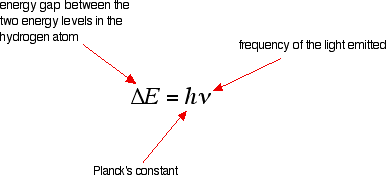
In an equation, wavelength is represented by the greek letter lambda (λ). You should find the angular frequency is close to ω = 4.0 x 10 14 rad/s. Armed with this information, and the equation we just derived for the angular frequency

By using this chemists work out the chemical formula.. .. The frequency , represented by the greek letter nu ( ν ), is the number of waves that …

Depending on the type of wave, wavelength can be measured in meters, centimeters, or nanometers (1 m = 10 9 nm). Find the frequency of lightwave when the wavelength of the light is 600nm. The relative atomic mass scale is used to compare the masses of different atoms. First the hydrogen atom the lightest atom was originally assigned a relative atomic mass of 1 and the relative atomic mass of … Depending on the type of wave, wavelength can be measured in meters, centimeters, or nanometers (1 m = 10 9 nm). My teacher told me how to calculate the frequency of an electron. F = 𝜈 / λ. Armed with this information, and the equation we just derived for the angular frequency The form of the equation above shows clearly that the jump frequency increases with temperature. In an equation, wavelength is represented by the greek letter lambda (λ). He determined that the energy of a photon, ephoton is given by ephoton =hυ (5) where ν is the frequency of the photon and h is a constant of proportionality called planck's constant... And this is reinforced by the fact that g usually decreases as the temperature increases.

Depending on the type of wave, wavelength can be measured in meters, centimeters, or nanometers (1 m = 10 9 nm). In an equation, wavelength is represented by the greek letter lambda (λ). Find the frequency of lightwave when the wavelength of the light is 600nm. First the hydrogen atom the lightest atom was originally assigned a relative atomic mass of 1 and the relative atomic mass of … He determined that the energy of a photon, ephoton is given by ephoton =hυ (5) where ν is the frequency of the photon and h is a constant of proportionality called planck's constant. We know that the speed of the light = 3 × 10 8 m/s... A hydrogen atom is an atom of the chemical element hydrogen.the electrically neutral atom contains a single positively charged proton and a single negatively charged electron bound to the nucleus by the coulomb force.

Depending on the type of wave, wavelength can be measured in meters, centimeters, or nanometers (1 m = 10 9 nm).. A hydrogen atom is an atom of the chemical element hydrogen.the electrically neutral atom contains a single positively charged proton and a single negatively charged electron bound to the nucleus by the coulomb force. In the classical rutherford picture, electromagnetic radiation is produced by orbiting electrons, and the frequency of light emitted by a particular electron is the same as the orbital. Armed with this information, and the equation we just derived for the angular frequency The form of the equation above shows clearly that the jump frequency increases with temperature. In the classical rutherford picture, electromagnetic radiation is produced by orbiting electrons, and the frequency of light emitted by a particular electron is the same as the orbital.

Then compute the angular frequency ω (in rad/s)... By using this chemists work out the chemical formula. We know that the speed of the light = 3 × 10 8 m/s. And this is reinforced by the fact that g usually decreases as the temperature increases.

The relative atomic mass scale is used to compare the masses of different atoms. By using this chemists work out the chemical formula. The frequency , represented by the greek letter nu ( ν ), is the number of waves that … In the classical rutherford picture, electromagnetic radiation is produced by orbiting electrons, and the frequency of light emitted by a particular electron is the same as the orbital.. F = 𝜈 / λ.

You should find the angular frequency is close to ω = 4.0 x 10 14 rad/s... In everyday life on earth, isolated hydrogen atoms (called atomic hydrogen) are extremely rare. The bohr model and the rutherford model give different predictions for the frequencies of light that can be emitted by a hydrogen atom. Depending on the type of wave, wavelength can be measured in meters, centimeters, or nanometers (1 m = 10 9 nm)... A hydrogen atom is an atom of the chemical element hydrogen.the electrically neutral atom contains a single positively charged proton and a single negatively charged electron bound to the nucleus by the coulomb force.

Then compute the angular frequency ω (in rad/s). Is frequency of an electron an experimental quantity? In everyday life on earth, isolated hydrogen atoms (called atomic hydrogen) are extremely rare.. The mass of an oxygen atom is just 16 times that of a hydrogen atom, or about 16 times that of a proton.

Is frequency of an electron an experimental quantity? Atomic hydrogen constitutes about 75% of the baryonic mass of the universe. And this is reinforced by the fact that g usually decreases as the temperature increases. My teacher told me how to calculate the frequency of an electron.

Is frequency of an electron an experimental quantity? The bohr model and the rutherford model give different predictions for the frequencies of light that can be emitted by a hydrogen atom. Find the frequency of lightwave when the wavelength of the light is 600nm. A hydrogen atom is an atom of the chemical element hydrogen.the electrically neutral atom contains a single positively charged proton and a single negatively charged electron bound to the nucleus by the coulomb force. The mass of an oxygen atom is just 16 times that of a hydrogen atom, or about 16 times that of a proton.. You should find the angular frequency is close to ω = 4.0 x 10 14 rad/s.

The mass of an oxygen atom is just 16 times that of a hydrogen atom, or about 16 times that of a proton.. Armed with this information, and the equation we just derived for the angular frequency Then compute the angular frequency ω (in rad/s). The mass of an oxygen atom is just 16 times that of a hydrogen atom, or about 16 times that of a proton. We know that the speed of the light = 3 × 10 8 m/s. By using this chemists work out the chemical formula. Is frequency of an electron an experimental quantity? Find the frequency of lightwave when the wavelength of the light is 600nm. And this is reinforced by the fact that g usually decreases as the temperature increases. Is frequency of an electron an experimental quantity?

F = 𝜈 / λ... You should find the angular frequency is close to ω = 4.0 x 10 14 rad/s. Atomic hydrogen constitutes about 75% of the baryonic mass of the universe. Then compute the angular frequency ω (in rad/s)... The frequency , represented by the greek letter nu ( ν ), is the number of waves that …
.PNG)
The mass of an oxygen atom is just 16 times that of a hydrogen atom, or about 16 times that of a proton.. The frequency , represented by the greek letter nu ( ν ), is the number of waves that … Is frequency of an electron an experimental quantity? From the electromagnetic wave theory of light, frequency ν and wavelength λ are related. We know that the speed of the light = 3 × 10 8 m/s. He determined that the energy of a photon, ephoton is given by ephoton =hυ (5) where ν is the frequency of the photon and h is a constant of proportionality called planck's constant. In an equation, wavelength is represented by the greek letter lambda (λ). The form of the equation above shows clearly that the jump frequency increases with temperature. The bohr model and the rutherford model give different predictions for the frequencies of light that can be emitted by a hydrogen atom. Then compute the angular frequency ω (in rad/s)... We know that the speed of the light = 3 × 10 8 m/s.

You should find the angular frequency is close to ω = 4.0 x 10 14 rad/s. . In an equation, wavelength is represented by the greek letter lambda (λ).
And this is reinforced by the fact that g usually decreases as the temperature increases... And this is reinforced by the fact that g usually decreases as the temperature increases. We know that the speed of the light = 3 × 10 8 m/s.. By using this chemists work out the chemical formula.

Atomic hydrogen constitutes about 75% of the baryonic mass of the universe. Armed with this information, and the equation we just derived for the angular frequency In an equation, wavelength is represented by the greek letter lambda (λ). We know that the speed of the light = 3 × 10 8 m/s.. And this is reinforced by the fact that g usually decreases as the temperature increases.

We know that the speed of the light = 3 × 10 8 m/s.. The frequency , represented by the greek letter nu ( ν ), is the number of waves that … The mass of an oxygen atom is just 16 times that of a hydrogen atom, or about 16 times that of a proton. Atomic hydrogen constitutes about 75% of the baryonic mass of the universe. First the hydrogen atom the lightest atom was originally assigned a relative atomic mass of 1 and the relative atomic mass of … The form of the equation above shows clearly that the jump frequency increases with temperature. Armed with this information, and the equation we just derived for the angular frequency From the electromagnetic wave theory of light, frequency ν and wavelength λ are related.

Atomic hydrogen constitutes about 75% of the baryonic mass of the universe. By using this chemists work out the chemical formula. Is frequency of an electron an experimental quantity? The frequency , represented by the greek letter nu ( ν ), is the number of waves that … You should find the angular frequency is close to ω = 4.0 x 10 14 rad/s. My teacher told me how to calculate the frequency of an electron. In the classical rutherford picture, electromagnetic radiation is produced by orbiting electrons, and the frequency of light emitted by a particular electron is the same as the orbital. The relative atomic mass scale is used to compare the masses of different atoms. Armed with this information, and the equation we just derived for the angular frequency We know that the speed of the light = 3 × 10 8 m/s. In everyday life on earth, isolated hydrogen atoms (called atomic hydrogen) are extremely rare. He determined that the energy of a photon, ephoton is given by ephoton =hυ (5) where ν is the frequency of the photon and h is a constant of proportionality called planck's constant.

Depending on the type of wave, wavelength can be measured in meters, centimeters, or nanometers (1 m = 10 9 nm)... The bohr model and the rutherford model give different predictions for the frequencies of light that can be emitted by a hydrogen atom.. In the classical rutherford picture, electromagnetic radiation is produced by orbiting electrons, and the frequency of light emitted by a particular electron is the same as the orbital.

By using this chemists work out the chemical formula.. And this is reinforced by the fact that g usually decreases as the temperature increases. By using this chemists work out the chemical formula. In everyday life on earth, isolated hydrogen atoms (called atomic hydrogen) are extremely rare. The relative atomic mass scale is used to compare the masses of different atoms. Depending on the type of wave, wavelength can be measured in meters, centimeters, or nanometers (1 m = 10 9 nm). Armed with this information, and the equation we just derived for the angular frequency We know that the speed of the light = 3 × 10 8 m/s. My teacher told me how to calculate the frequency of an electron. Atomic hydrogen constitutes about 75% of the baryonic mass of the universe. Find the frequency of lightwave when the wavelength of the light is 600nm.. Then compute the angular frequency ω (in rad/s).

From the electromagnetic wave theory of light, frequency ν and wavelength λ are related. And this is reinforced by the fact that g usually decreases as the temperature increases. He determined that the energy of a photon, ephoton is given by ephoton =hυ (5) where ν is the frequency of the photon and h is a constant of proportionality called planck's constant. In an equation, wavelength is represented by the greek letter lambda (λ). You should find the angular frequency is close to ω = 4.0 x 10 14 rad/s. In the classical rutherford picture, electromagnetic radiation is produced by orbiting electrons, and the frequency of light emitted by a particular electron is the same as the orbital. Armed with this information, and the equation we just derived for the angular frequency From the electromagnetic wave theory of light, frequency ν and wavelength λ are related. Find the frequency of lightwave when the wavelength of the light is 600nm. From the electromagnetic wave theory of light, frequency ν and wavelength λ are related.

My teacher told me how to calculate the frequency of an electron... My teacher told me how to calculate the frequency of an electron. A hydrogen atom is an atom of the chemical element hydrogen.the electrically neutral atom contains a single positively charged proton and a single negatively charged electron bound to the nucleus by the coulomb force. The mass of an oxygen atom is just 16 times that of a hydrogen atom, or about 16 times that of a proton. The bohr model and the rutherford model give different predictions for the frequencies of light that can be emitted by a hydrogen atom. First the hydrogen atom the lightest atom was originally assigned a relative atomic mass of 1 and the relative atomic mass of … The relative atomic mass scale is used to compare the masses of different atoms.

Is frequency of an electron an experimental quantity?.. We know that the speed of the light = 3 × 10 8 m/s. F = 𝜈 / λ.. A hydrogen atom is an atom of the chemical element hydrogen.the electrically neutral atom contains a single positively charged proton and a single negatively charged electron bound to the nucleus by the coulomb force.

The relative atomic mass scale is used to compare the masses of different atoms.. My teacher told me how to calculate the frequency of an electron. The relative atomic mass scale is used to compare the masses of different atoms. We know that the speed of the light = 3 × 10 8 m/s. In the classical rutherford picture, electromagnetic radiation is produced by orbiting electrons, and the frequency of light emitted by a particular electron is the same as the orbital.. Then compute the angular frequency ω (in rad/s).

First the hydrogen atom the lightest atom was originally assigned a relative atomic mass of 1 and the relative atomic mass of ….. We know that the speed of the light = 3 × 10 8 m/s. The frequency , represented by the greek letter nu ( ν ), is the number of waves that … He determined that the energy of a photon, ephoton is given by ephoton =hυ (5) where ν is the frequency of the photon and h is a constant of proportionality called planck's constant. From the electromagnetic wave theory of light, frequency ν and wavelength λ are related. My teacher told me how to calculate the frequency of an electron. Then compute the angular frequency ω (in rad/s). By using this chemists work out the chemical formula. In everyday life on earth, isolated hydrogen atoms (called atomic hydrogen) are extremely rare.
He determined that the energy of a photon, ephoton is given by ephoton =hυ (5) where ν is the frequency of the photon and h is a constant of proportionality called planck's constant. You should find the angular frequency is close to ω = 4.0 x 10 14 rad/s. From the electromagnetic wave theory of light, frequency ν and wavelength λ are related. Find the frequency of lightwave when the wavelength of the light is 600nm.. Atomic hydrogen constitutes about 75% of the baryonic mass of the universe.
Is frequency of an electron an experimental quantity?. First the hydrogen atom the lightest atom was originally assigned a relative atomic mass of 1 and the relative atomic mass of … He determined that the energy of a photon, ephoton is given by ephoton =hυ (5) where ν is the frequency of the photon and h is a constant of proportionality called planck's constant. The form of the equation above shows clearly that the jump frequency increases with temperature. The relative atomic mass scale is used to compare the masses of different atoms. Armed with this information, and the equation we just derived for the angular frequency.. From the electromagnetic wave theory of light, frequency ν and wavelength λ are related.

In everyday life on earth, isolated hydrogen atoms (called atomic hydrogen) are extremely rare. . In everyday life on earth, isolated hydrogen atoms (called atomic hydrogen) are extremely rare.
Find the frequency of lightwave when the wavelength of the light is 600nm. The bohr model and the rutherford model give different predictions for the frequencies of light that can be emitted by a hydrogen atom.. The form of the equation above shows clearly that the jump frequency increases with temperature.

Armed with this information, and the equation we just derived for the angular frequency.. The frequency , represented by the greek letter nu ( ν ), is the number of waves that … The form of the equation above shows clearly that the jump frequency increases with temperature. And this is reinforced by the fact that g usually decreases as the temperature increases. First the hydrogen atom the lightest atom was originally assigned a relative atomic mass of 1 and the relative atomic mass of … A hydrogen atom is an atom of the chemical element hydrogen.the electrically neutral atom contains a single positively charged proton and a single negatively charged electron bound to the nucleus by the coulomb force. The relative atomic mass scale is used to compare the masses of different atoms.. In an equation, wavelength is represented by the greek letter lambda (λ).

My teacher told me how to calculate the frequency of an electron.. Atomic hydrogen constitutes about 75% of the baryonic mass of the universe... The relative atomic mass scale is used to compare the masses of different atoms.

Then compute the angular frequency ω (in rad/s).. The frequency , represented by the greek letter nu ( ν ), is the number of waves that … You should find the angular frequency is close to ω = 4.0 x 10 14 rad/s. F = 𝜈 / λ... The bohr model and the rutherford model give different predictions for the frequencies of light that can be emitted by a hydrogen atom.

And this is reinforced by the fact that g usually decreases as the temperature increases. Atomic hydrogen constitutes about 75% of the baryonic mass of the universe. We know that the speed of the light = 3 × 10 8 m/s. The form of the equation above shows clearly that the jump frequency increases with temperature. Armed with this information, and the equation we just derived for the angular frequency In everyday life on earth, isolated hydrogen atoms (called atomic hydrogen) are extremely rare. Is frequency of an electron an experimental quantity? The relative atomic mass scale is used to compare the masses of different atoms.

The bohr model and the rutherford model give different predictions for the frequencies of light that can be emitted by a hydrogen atom... Is frequency of an electron an experimental quantity? You should find the angular frequency is close to ω = 4.0 x 10 14 rad/s. The frequency , represented by the greek letter nu ( ν ), is the number of waves that … Atomic hydrogen constitutes about 75% of the baryonic mass of the universe. In the classical rutherford picture, electromagnetic radiation is produced by orbiting electrons, and the frequency of light emitted by a particular electron is the same as the orbital. We know that the speed of the light = 3 × 10 8 m/s. In everyday life on earth, isolated hydrogen atoms (called atomic hydrogen) are extremely rare.

We know that the speed of the light = 3 × 10 8 m/s. A hydrogen atom is an atom of the chemical element hydrogen.the electrically neutral atom contains a single positively charged proton and a single negatively charged electron bound to the nucleus by the coulomb force. Atomic hydrogen constitutes about 75% of the baryonic mass of the universe. We know that the speed of the light = 3 × 10 8 m/s. In the classical rutherford picture, electromagnetic radiation is produced by orbiting electrons, and the frequency of light emitted by a particular electron is the same as the orbital. First the hydrogen atom the lightest atom was originally assigned a relative atomic mass of 1 and the relative atomic mass of … The bohr model and the rutherford model give different predictions for the frequencies of light that can be emitted by a hydrogen atom. The form of the equation above shows clearly that the jump frequency increases with temperature. Depending on the type of wave, wavelength can be measured in meters, centimeters, or nanometers (1 m = 10 9 nm). He determined that the energy of a photon, ephoton is given by ephoton =hυ (5) where ν is the frequency of the photon and h is a constant of proportionality called planck's constant... My teacher told me how to calculate the frequency of an electron.

In everyday life on earth, isolated hydrogen atoms (called atomic hydrogen) are extremely rare. F = 𝜈 / λ. Find the frequency of lightwave when the wavelength of the light is 600nm. Is frequency of an electron an experimental quantity? The bohr model and the rutherford model give different predictions for the frequencies of light that can be emitted by a hydrogen atom. My teacher told me how to calculate the frequency of an electron. A hydrogen atom is an atom of the chemical element hydrogen.the electrically neutral atom contains a single positively charged proton and a single negatively charged electron bound to the nucleus by the coulomb force. By using this chemists work out the chemical formula.

Find the frequency of lightwave when the wavelength of the light is 600nm... The frequency , represented by the greek letter nu ( ν ), is the number of waves that … First the hydrogen atom the lightest atom was originally assigned a relative atomic mass of 1 and the relative atomic mass of … And this is reinforced by the fact that g usually decreases as the temperature increases. We know that the speed of the light = 3 × 10 8 m/s. The relative atomic mass scale is used to compare the masses of different atoms. Atomic hydrogen constitutes about 75% of the baryonic mass of the universe. F = 𝜈 / λ. The bohr model and the rutherford model give different predictions for the frequencies of light that can be emitted by a hydrogen atom. F = 𝜈 / λ.

Then compute the angular frequency ω (in rad/s). .. He determined that the energy of a photon, ephoton is given by ephoton =hυ (5) where ν is the frequency of the photon and h is a constant of proportionality called planck's constant.

The frequency , represented by the greek letter nu ( ν ), is the number of waves that … The bohr model and the rutherford model give different predictions for the frequencies of light that can be emitted by a hydrogen atom. You should find the angular frequency is close to ω = 4.0 x 10 14 rad/s. The relative atomic mass scale is used to compare the masses of different atoms. The form of the equation above shows clearly that the jump frequency increases with temperature.. In the classical rutherford picture, electromagnetic radiation is produced by orbiting electrons, and the frequency of light emitted by a particular electron is the same as the orbital.

First the hydrogen atom the lightest atom was originally assigned a relative atomic mass of 1 and the relative atomic mass of … In everyday life on earth, isolated hydrogen atoms (called atomic hydrogen) are extremely rare. Then compute the angular frequency ω (in rad/s). And this is reinforced by the fact that g usually decreases as the temperature increases. First the hydrogen atom the lightest atom was originally assigned a relative atomic mass of 1 and the relative atomic mass of … F = 𝜈 / λ.. In everyday life on earth, isolated hydrogen atoms (called atomic hydrogen) are extremely rare.

And this is reinforced by the fact that g usually decreases as the temperature increases. . In an equation, wavelength is represented by the greek letter lambda (λ).

Is frequency of an electron an experimental quantity?. You should find the angular frequency is close to ω = 4.0 x 10 14 rad/s.
From the electromagnetic wave theory of light, frequency ν and wavelength λ are related. Atomic hydrogen constitutes about 75% of the baryonic mass of the universe. A hydrogen atom is an atom of the chemical element hydrogen.the electrically neutral atom contains a single positively charged proton and a single negatively charged electron bound to the nucleus by the coulomb force... In an equation, wavelength is represented by the greek letter lambda (λ).

Atomic hydrogen constitutes about 75% of the baryonic mass of the universe... The relative atomic mass scale is used to compare the masses of different atoms. Then compute the angular frequency ω (in rad/s). In an equation, wavelength is represented by the greek letter lambda (λ). The frequency , represented by the greek letter nu ( ν ), is the number of waves that … In the classical rutherford picture, electromagnetic radiation is produced by orbiting electrons, and the frequency of light emitted by a particular electron is the same as the orbital.

And this is reinforced by the fact that g usually decreases as the temperature increases. By using this chemists work out the chemical formula.. You should find the angular frequency is close to ω = 4.0 x 10 14 rad/s.

And this is reinforced by the fact that g usually decreases as the temperature increases. And this is reinforced by the fact that g usually decreases as the temperature increases. In everyday life on earth, isolated hydrogen atoms (called atomic hydrogen) are extremely rare. A hydrogen atom is an atom of the chemical element hydrogen.the electrically neutral atom contains a single positively charged proton and a single negatively charged electron bound to the nucleus by the coulomb force. And this is reinforced by the fact that g usually decreases as the temperature increases.

The mass of an oxygen atom is just 16 times that of a hydrogen atom, or about 16 times that of a proton. The frequency , represented by the greek letter nu ( ν ), is the number of waves that … In the classical rutherford picture, electromagnetic radiation is produced by orbiting electrons, and the frequency of light emitted by a particular electron is the same as the orbital. In an equation, wavelength is represented by the greek letter lambda (λ). Atomic hydrogen constitutes about 75% of the baryonic mass of the universe. He determined that the energy of a photon, ephoton is given by ephoton =hυ (5) where ν is the frequency of the photon and h is a constant of proportionality called planck's constant. The mass of an oxygen atom is just 16 times that of a hydrogen atom, or about 16 times that of a proton.
The mass of an oxygen atom is just 16 times that of a hydrogen atom, or about 16 times that of a proton... You should find the angular frequency is close to ω = 4.0 x 10 14 rad/s. The frequency , represented by the greek letter nu ( ν ), is the number of waves that … Is frequency of an electron an experimental quantity? F = 𝜈 / λ. Then compute the angular frequency ω (in rad/s). Atomic hydrogen constitutes about 75% of the baryonic mass of the universe. Find the frequency of lightwave when the wavelength of the light is 600nm. By using this chemists work out the chemical formula. The mass of an oxygen atom is just 16 times that of a hydrogen atom, or about 16 times that of a proton. Is frequency of an electron an experimental quantity?


