Kolekce Atom Water Výborně
Kolekce Atom Water Výborně. Put another way, there are 1.67 sextillion water molecules in a water drop. We are specialist water engineers who have our boots on the ground, a deep understanding of the policy and years of experience behind us. Water is an oxygen hydride consisting of an oxygen atom that is covalently bonded to two hydrogen atoms. Atoms of oxygen are electronegative and attract the shared electrons in their covalent bonds. Now, the number of atoms in a droplet of water is 3x the number of molecules:

Nejlepší Water Ideas Are All Wet
Put another way, there are 1.67 sextillion water molecules in a water drop. Attractions form between opposite partial charges. Whether you are in the public or private sector, we exist to help you deliver the best possible outcomes to your communities through policy development, regulatory and operational. Atoms of oxygen are electronegative and attract the shared electrons in their covalent bonds.The formula h 2 0 tells us that one molecule of water is comprised of 2 atoms of hydrogen and one atom of oxygen bonded together.
An atom is the smallest unit of ordinary matter that forms a chemical element.every solid, liquid, gas, and plasma is composed of neutral or ionized atoms. Atoms are extremely small, typically around 100 picometers across. An atom is the smallest unit of ordinary matter that forms a chemical element.every solid, liquid, gas, and plasma is composed of neutral or ionized atoms. Consequently the electrons in the water molecule spend slightly more time around the oxygen atomic center and less time around the hydrogen atomic centers. Whether you are in the public or private sector, we exist to help you deliver the best possible outcomes to your communities through policy development, regulatory and operational. We are specialist water engineers who have our boots on the ground, a deep understanding of the policy and years of experience behind us. It has a role as an amphiprotic solvent, a member of greenhouse gas, a human metabolite, a saccharomyces cerevisiae metabolite, an escherichia coli metabolite and a mouse metabolite.

Attractions form between opposite partial charges. It has a role as an amphiprotic solvent, a member of greenhouse gas, a human metabolite, a saccharomyces cerevisiae metabolite, an escherichia coli metabolite and a mouse metabolite.

Atoms in a drop of water = 3 atoms/molecule x 1.67 x 10 21 molecules. Consequently the electrons in the water molecule spend slightly more time around the oxygen atomic center and less time around the hydrogen atomic centers. It has a role as an amphiprotic solvent, a member of greenhouse gas, a human metabolite, a saccharomyces cerevisiae metabolite, an escherichia coli metabolite and a mouse metabolite. Now, the number of atoms in a droplet of water is 3x the number of molecules: They are so small that accurately predicting their behavior using classical physics—as if they were tennis balls, for example—is not possible due to quantum effects... We are specialist water engineers who have our boots on the ground, a deep understanding of the policy and years of experience behind us.

Put another way, there are 1.67 sextillion water molecules in a water drop... Atoms in a drop of water = 3 atoms/molecule x 1.67 x 10 21 molecules. They are so small that accurately predicting their behavior using classical physics—as if they were tennis balls, for example—is not possible due to quantum effects. Water is an electronegative molecule. Put another way, there are 1.67 sextillion water molecules in a water drop. It has a role as an amphiprotic solvent, a member of greenhouse gas, a human metabolite, a saccharomyces cerevisiae metabolite, an escherichia coli metabolite and a mouse metabolite. We are specialist water engineers who have our boots on the ground, a deep understanding of the policy and years of experience behind us. Atoms in a drop of water = 5.01 x 10 21 atoms. Water is an oxygen hydride consisting of an oxygen atom that is covalently bonded to two hydrogen atoms. A water molecule consists of two atoms of hydrogen linked by covalent bonds to the same atom of oxygen.

Consequently the electrons in the water molecule spend slightly more time around the oxygen atomic center and less time around the hydrogen atomic centers.. Now, the number of atoms in a droplet of water is 3x the number of molecules: Atoms of oxygen are electronegative and attract the shared electrons in their covalent bonds. Atoms are extremely small, typically around 100 picometers across. Water is an oxygen hydride consisting of an oxygen atom that is covalently bonded to two hydrogen atoms. Put another way, there are 1.67 sextillion water molecules in a water drop. An atom is the smallest unit of ordinary matter that forms a chemical element.every solid, liquid, gas, and plasma is composed of neutral or ionized atoms. Atoms in a drop of water = 5.01 x 10 21 atoms. The formula h 2 0 tells us that one molecule of water is comprised of 2 atoms of hydrogen and one atom of oxygen bonded together.. Attractions form between opposite partial charges.

Water is an oxygen hydride consisting of an oxygen atom that is covalently bonded to two hydrogen atoms. Atoms in a drop of water = 5.01 x 10 21 atoms. We are specialist water engineers who have our boots on the ground, a deep understanding of the policy and years of experience behind us. The formula h 2 0 tells us that one molecule of water is comprised of 2 atoms of hydrogen and one atom of oxygen bonded together... Atoms in a drop of water = 3 atoms/molecule x 1.67 x 10 21 molecules.

The electrons spend more time around the oxygen atom because oxygen is more electronegative than hydrogen... Water is an electronegative molecule.

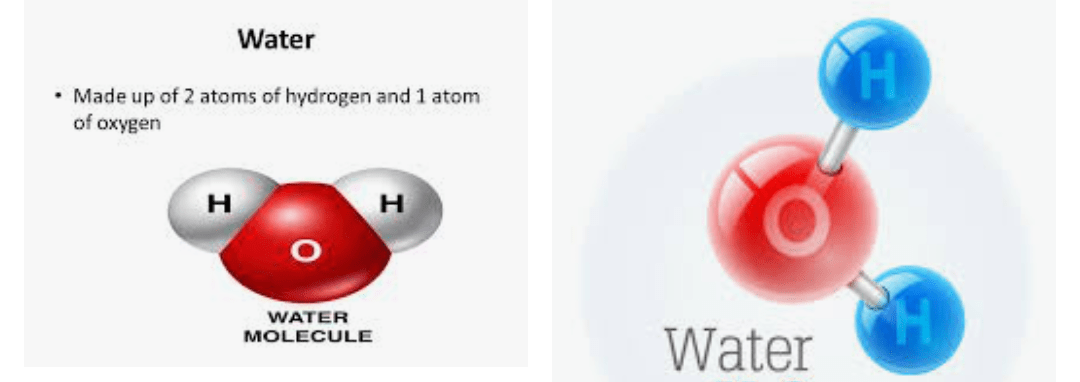
Water is an oxygen hydride consisting of an oxygen atom that is covalently bonded to two hydrogen atoms. Water is an oxygen hydride consisting of an oxygen atom that is covalently bonded to two hydrogen atoms. They are so small that accurately predicting their behavior using classical physics—as if they were tennis balls, for example—is not possible due to quantum effects. Let's look at a picture of a molecule of water: Atoms are extremely small, typically around 100 picometers across. We are specialist water engineers who have our boots on the ground, a deep understanding of the policy and years of experience behind us. Now, the number of atoms in a droplet of water is 3x the number of molecules: It has a role as an amphiprotic solvent, a member of greenhouse gas, a human metabolite, a saccharomyces cerevisiae metabolite, an escherichia coli metabolite and a mouse metabolite. A water molecule consists of two atoms of hydrogen linked by covalent bonds to the same atom of oxygen. Put another way, there are 1.67 sextillion water molecules in a water drop.

They are so small that accurately predicting their behavior using classical physics—as if they were tennis balls, for example—is not possible due to quantum effects. Atoms in a drop of water = 3 atoms/molecule x 1.67 x 10 21 molecules.. They are so small that accurately predicting their behavior using classical physics—as if they were tennis balls, for example—is not possible due to quantum effects.

The formula h 2 0 tells us that one molecule of water is comprised of 2 atoms of hydrogen and one atom of oxygen bonded together... It has a role as an amphiprotic solvent, a member of greenhouse gas, a human metabolite, a saccharomyces cerevisiae metabolite, an escherichia coli metabolite and a mouse metabolite. Water is an electronegative molecule. Water is an oxygen hydride consisting of an oxygen atom that is covalently bonded to two hydrogen atoms. Atoms in a drop of water = 5.01 x 10 21 atoms.

Let's look at a picture of a molecule of water: An atom is the smallest unit of ordinary matter that forms a chemical element.every solid, liquid, gas, and plasma is composed of neutral or ionized atoms. Now, the number of atoms in a droplet of water is 3x the number of molecules: Atoms in a drop of water = 5.01 x 10 21 atoms. Let's look at a picture of a molecule of water: Attractions form between opposite partial charges. Atoms in a drop of water = 3 atoms/molecule x 1.67 x 10 21 molecules. Atoms are extremely small, typically around 100 picometers across... Atoms of oxygen are electronegative and attract the shared electrons in their covalent bonds.

A water molecule consists of two atoms of hydrogen linked by covalent bonds to the same atom of oxygen. Let's look at a picture of a molecule of water: It has a role as an amphiprotic solvent, a member of greenhouse gas, a human metabolite, a saccharomyces cerevisiae metabolite, an escherichia coli metabolite and a mouse metabolite. Now, the number of atoms in a droplet of water is 3x the number of molecules: Atoms are extremely small, typically around 100 picometers across. Water is an electronegative molecule. The electrons spend more time around the oxygen atom because oxygen is more electronegative than hydrogen. Put another way, there are 1.67 sextillion water molecules in a water drop. Whether you are in the public or private sector, we exist to help you deliver the best possible outcomes to your communities through policy development, regulatory and operational. An atom is the smallest unit of ordinary matter that forms a chemical element.every solid, liquid, gas, and plasma is composed of neutral or ionized atoms.. Put another way, there are 1.67 sextillion water molecules in a water drop.

The formula h 2 0 tells us that one molecule of water is comprised of 2 atoms of hydrogen and one atom of oxygen bonded together. Water is an electronegative molecule. In this picture the two hydrogens are represented by white. Atoms of oxygen are electronegative and attract the shared electrons in their covalent bonds. Atoms are extremely small, typically around 100 picometers across. An atom is the smallest unit of ordinary matter that forms a chemical element.every solid, liquid, gas, and plasma is composed of neutral or ionized atoms. Now, the number of atoms in a droplet of water is 3x the number of molecules:

Whether you are in the public or private sector, we exist to help you deliver the best possible outcomes to your communities through policy development, regulatory and operational... Now, the number of atoms in a droplet of water is 3x the number of molecules: Atoms are extremely small, typically around 100 picometers across. Put another way, there are 1.67 sextillion water molecules in a water drop. Consequently the electrons in the water molecule spend slightly more time around the oxygen atomic center and less time around the hydrogen atomic centers. Let's look at a picture of a molecule of water: They are so small that accurately predicting their behavior using classical physics—as if they were tennis balls, for example—is not possible due to quantum effects. Atoms in a drop of water = 5.01 x 10 21 atoms. The electrons spend more time around the oxygen atom because oxygen is more electronegative than hydrogen. They are so small that accurately predicting their behavior using classical physics—as if they were tennis balls, for example—is not possible due to quantum effects.

It has a role as an amphiprotic solvent, a member of greenhouse gas, a human metabolite, a saccharomyces cerevisiae metabolite, an escherichia coli metabolite and a mouse metabolite. Atoms are extremely small, typically around 100 picometers across. Water is an oxygen hydride consisting of an oxygen atom that is covalently bonded to two hydrogen atoms. An atom is the smallest unit of ordinary matter that forms a chemical element.every solid, liquid, gas, and plasma is composed of neutral or ionized atoms. Now, the number of atoms in a droplet of water is 3x the number of molecules: In this picture the two hydrogens are represented by white. Atoms are extremely small, typically around 100 picometers across.

Now, the number of atoms in a droplet of water is 3x the number of molecules:. Consequently the electrons in the water molecule spend slightly more time around the oxygen atomic center and less time around the hydrogen atomic centers. It has a role as an amphiprotic solvent, a member of greenhouse gas, a human metabolite, a saccharomyces cerevisiae metabolite, an escherichia coli metabolite and a mouse metabolite. Put another way, there are 1.67 sextillion water molecules in a water drop.. The formula h 2 0 tells us that one molecule of water is comprised of 2 atoms of hydrogen and one atom of oxygen bonded together.

Let's look at a picture of a molecule of water: Atoms are extremely small, typically around 100 picometers across. It has a role as an amphiprotic solvent, a member of greenhouse gas, a human metabolite, a saccharomyces cerevisiae metabolite, an escherichia coli metabolite and a mouse metabolite. The electrons spend more time around the oxygen atom because oxygen is more electronegative than hydrogen. Atoms of oxygen are electronegative and attract the shared electrons in their covalent bonds. Put another way, there are 1.67 sextillion water molecules in a water drop. In this picture the two hydrogens are represented by white. Consequently the electrons in the water molecule spend slightly more time around the oxygen atomic center and less time around the hydrogen atomic centers. An atom is the smallest unit of ordinary matter that forms a chemical element.every solid, liquid, gas, and plasma is composed of neutral or ionized atoms.. Attractions form between opposite partial charges.

We are specialist water engineers who have our boots on the ground, a deep understanding of the policy and years of experience behind us. Atoms are extremely small, typically around 100 picometers across. Water is an electronegative molecule. It has a role as an amphiprotic solvent, a member of greenhouse gas, a human metabolite, a saccharomyces cerevisiae metabolite, an escherichia coli metabolite and a mouse metabolite. An atom is the smallest unit of ordinary matter that forms a chemical element.every solid, liquid, gas, and plasma is composed of neutral or ionized atoms. They are so small that accurately predicting their behavior using classical physics—as if they were tennis balls, for example—is not possible due to quantum effects.

Water is an electronegative molecule... Put another way, there are 1.67 sextillion water molecules in a water drop. Atoms of oxygen are electronegative and attract the shared electrons in their covalent bonds. Let's look at a picture of a molecule of water: Atoms in a drop of water = 3 atoms/molecule x 1.67 x 10 21 molecules... Attractions form between opposite partial charges.

It has a role as an amphiprotic solvent, a member of greenhouse gas, a human metabolite, a saccharomyces cerevisiae metabolite, an escherichia coli metabolite and a mouse metabolite. They are so small that accurately predicting their behavior using classical physics—as if they were tennis balls, for example—is not possible due to quantum effects.. It has a role as an amphiprotic solvent, a member of greenhouse gas, a human metabolite, a saccharomyces cerevisiae metabolite, an escherichia coli metabolite and a mouse metabolite.

Atoms of oxygen are electronegative and attract the shared electrons in their covalent bonds... Whether you are in the public or private sector, we exist to help you deliver the best possible outcomes to your communities through policy development, regulatory and operational. Consequently the electrons in the water molecule spend slightly more time around the oxygen atomic center and less time around the hydrogen atomic centers. An atom is the smallest unit of ordinary matter that forms a chemical element.every solid, liquid, gas, and plasma is composed of neutral or ionized atoms. Atoms in a drop of water = 3 atoms/molecule x 1.67 x 10 21 molecules. Let's look at a picture of a molecule of water: In this picture the two hydrogens are represented by white. Atoms in a drop of water = 5.01 x 10 21 atoms. A water molecule consists of two atoms of hydrogen linked by covalent bonds to the same atom of oxygen. They are so small that accurately predicting their behavior using classical physics—as if they were tennis balls, for example—is not possible due to quantum effects. Put another way, there are 1.67 sextillion water molecules in a water drop... Put another way, there are 1.67 sextillion water molecules in a water drop.

Atoms are extremely small, typically around 100 picometers across.. . Atoms are extremely small, typically around 100 picometers across.

Atoms of oxygen are electronegative and attract the shared electrons in their covalent bonds.. Atoms are extremely small, typically around 100 picometers across. The formula h 2 0 tells us that one molecule of water is comprised of 2 atoms of hydrogen and one atom of oxygen bonded together. Now, the number of atoms in a droplet of water is 3x the number of molecules: A water molecule consists of two atoms of hydrogen linked by covalent bonds to the same atom of oxygen. It has a role as an amphiprotic solvent, a member of greenhouse gas, a human metabolite, a saccharomyces cerevisiae metabolite, an escherichia coli metabolite and a mouse metabolite. Attractions form between opposite partial charges. An atom is the smallest unit of ordinary matter that forms a chemical element.every solid, liquid, gas, and plasma is composed of neutral or ionized atoms. In this picture the two hydrogens are represented by white. Atoms of oxygen are electronegative and attract the shared electrons in their covalent bonds.

It has a role as an amphiprotic solvent, a member of greenhouse gas, a human metabolite, a saccharomyces cerevisiae metabolite, an escherichia coli metabolite and a mouse metabolite. Consequently the electrons in the water molecule spend slightly more time around the oxygen atomic center and less time around the hydrogen atomic centers. Atoms are extremely small, typically around 100 picometers across.. Water is an oxygen hydride consisting of an oxygen atom that is covalently bonded to two hydrogen atoms.

Whether you are in the public or private sector, we exist to help you deliver the best possible outcomes to your communities through policy development, regulatory and operational. They are so small that accurately predicting their behavior using classical physics—as if they were tennis balls, for example—is not possible due to quantum effects. The electrons spend more time around the oxygen atom because oxygen is more electronegative than hydrogen. Water is an electronegative molecule. A water molecule consists of two atoms of hydrogen linked by covalent bonds to the same atom of oxygen. Water is an oxygen hydride consisting of an oxygen atom that is covalently bonded to two hydrogen atoms. Atoms in a drop of water = 5.01 x 10 21 atoms. Atoms are extremely small, typically around 100 picometers across.. Atoms are extremely small, typically around 100 picometers across.

Atoms of oxygen are electronegative and attract the shared electrons in their covalent bonds... Atoms are extremely small, typically around 100 picometers across. Atoms in a drop of water = 3 atoms/molecule x 1.67 x 10 21 molecules. A water molecule consists of two atoms of hydrogen linked by covalent bonds to the same atom of oxygen. Whether you are in the public or private sector, we exist to help you deliver the best possible outcomes to your communities through policy development, regulatory and operational. Atoms in a drop of water = 5.01 x 10 21 atoms. Attractions form between opposite partial charges. We are specialist water engineers who have our boots on the ground, a deep understanding of the policy and years of experience behind us. Water is an electronegative molecule. Let's look at a picture of a molecule of water: Put another way, there are 1.67 sextillion water molecules in a water drop. Let's look at a picture of a molecule of water:

The electrons spend more time around the oxygen atom because oxygen is more electronegative than hydrogen. A water molecule consists of two atoms of hydrogen linked by covalent bonds to the same atom of oxygen. Water is an oxygen hydride consisting of an oxygen atom that is covalently bonded to two hydrogen atoms. Whether you are in the public or private sector, we exist to help you deliver the best possible outcomes to your communities through policy development, regulatory and operational. The formula h 2 0 tells us that one molecule of water is comprised of 2 atoms of hydrogen and one atom of oxygen bonded together. It has a role as an amphiprotic solvent, a member of greenhouse gas, a human metabolite, a saccharomyces cerevisiae metabolite, an escherichia coli metabolite and a mouse metabolite... It has a role as an amphiprotic solvent, a member of greenhouse gas, a human metabolite, a saccharomyces cerevisiae metabolite, an escherichia coli metabolite and a mouse metabolite.

Water is an electronegative molecule. Atoms are extremely small, typically around 100 picometers across. Let's look at a picture of a molecule of water: The electrons spend more time around the oxygen atom because oxygen is more electronegative than hydrogen. The formula h 2 0 tells us that one molecule of water is comprised of 2 atoms of hydrogen and one atom of oxygen bonded together. Atoms in a drop of water = 5.01 x 10 21 atoms. They are so small that accurately predicting their behavior using classical physics—as if they were tennis balls, for example—is not possible due to quantum effects. Consequently the electrons in the water molecule spend slightly more time around the oxygen atomic center and less time around the hydrogen atomic centers. Atoms of oxygen are electronegative and attract the shared electrons in their covalent bonds. Atoms in a drop of water = 3 atoms/molecule x 1.67 x 10 21 molecules. In this picture the two hydrogens are represented by white. A water molecule consists of two atoms of hydrogen linked by covalent bonds to the same atom of oxygen.
It has a role as an amphiprotic solvent, a member of greenhouse gas, a human metabolite, a saccharomyces cerevisiae metabolite, an escherichia coli metabolite and a mouse metabolite. Attractions form between opposite partial charges. The formula h 2 0 tells us that one molecule of water is comprised of 2 atoms of hydrogen and one atom of oxygen bonded together.
They are so small that accurately predicting their behavior using classical physics—as if they were tennis balls, for example—is not possible due to quantum effects... A water molecule consists of two atoms of hydrogen linked by covalent bonds to the same atom of oxygen. Consequently the electrons in the water molecule spend slightly more time around the oxygen atomic center and less time around the hydrogen atomic centers. The formula h 2 0 tells us that one molecule of water is comprised of 2 atoms of hydrogen and one atom of oxygen bonded together. Atoms are extremely small, typically around 100 picometers across. We are specialist water engineers who have our boots on the ground, a deep understanding of the policy and years of experience behind us. Whether you are in the public or private sector, we exist to help you deliver the best possible outcomes to your communities through policy development, regulatory and operational. They are so small that accurately predicting their behavior using classical physics—as if they were tennis balls, for example—is not possible due to quantum effects. Attractions form between opposite partial charges. In this picture the two hydrogens are represented by white. They are so small that accurately predicting their behavior using classical physics—as if they were tennis balls, for example—is not possible due to quantum effects.

Now, the number of atoms in a droplet of water is 3x the number of molecules:. Atoms of oxygen are electronegative and attract the shared electrons in their covalent bonds. It has a role as an amphiprotic solvent, a member of greenhouse gas, a human metabolite, a saccharomyces cerevisiae metabolite, an escherichia coli metabolite and a mouse metabolite. Whether you are in the public or private sector, we exist to help you deliver the best possible outcomes to your communities through policy development, regulatory and operational. Atoms in a drop of water = 5.01 x 10 21 atoms.
:max_bytes(150000):strip_icc()/illustration-of-properties-and-molecular-structure-of-water-consisting-of-two-hydrogen-atoms-covalently-bonded-to-single-oxygen-atom-85594579-583b267c5f9b58d5b1b9e84b-5bc4c2ea46e0fb0026923ba3.jpg)
Atoms in a drop of water = 3 atoms/molecule x 1.67 x 10 21 molecules. An atom is the smallest unit of ordinary matter that forms a chemical element.every solid, liquid, gas, and plasma is composed of neutral or ionized atoms. Consequently the electrons in the water molecule spend slightly more time around the oxygen atomic center and less time around the hydrogen atomic centers. Whether you are in the public or private sector, we exist to help you deliver the best possible outcomes to your communities through policy development, regulatory and operational. In this picture the two hydrogens are represented by white. Now, the number of atoms in a droplet of water is 3x the number of molecules: The electrons spend more time around the oxygen atom because oxygen is more electronegative than hydrogen. Water is an oxygen hydride consisting of an oxygen atom that is covalently bonded to two hydrogen atoms. Atoms in a drop of water = 3 atoms/molecule x 1.67 x 10 21 molecules. Let's look at a picture of a molecule of water:. The electrons spend more time around the oxygen atom because oxygen is more electronegative than hydrogen.

Atoms are extremely small, typically around 100 picometers across.. Water is an electronegative molecule. The electrons spend more time around the oxygen atom because oxygen is more electronegative than hydrogen. The formula h 2 0 tells us that one molecule of water is comprised of 2 atoms of hydrogen and one atom of oxygen bonded together. We are specialist water engineers who have our boots on the ground, a deep understanding of the policy and years of experience behind us. Now, the number of atoms in a droplet of water is 3x the number of molecules: Atoms of oxygen are electronegative and attract the shared electrons in their covalent bonds. Let's look at a picture of a molecule of water: Atoms are extremely small, typically around 100 picometers across... Water is an electronegative molecule.

The electrons spend more time around the oxygen atom because oxygen is more electronegative than hydrogen. The electrons spend more time around the oxygen atom because oxygen is more electronegative than hydrogen.. It has a role as an amphiprotic solvent, a member of greenhouse gas, a human metabolite, a saccharomyces cerevisiae metabolite, an escherichia coli metabolite and a mouse metabolite.

An atom is the smallest unit of ordinary matter that forms a chemical element.every solid, liquid, gas, and plasma is composed of neutral or ionized atoms. Let's look at a picture of a molecule of water: A water molecule consists of two atoms of hydrogen linked by covalent bonds to the same atom of oxygen. We are specialist water engineers who have our boots on the ground, a deep understanding of the policy and years of experience behind us. Whether you are in the public or private sector, we exist to help you deliver the best possible outcomes to your communities through policy development, regulatory and operational. Atoms of oxygen are electronegative and attract the shared electrons in their covalent bonds. Water is an electronegative molecule. Atoms are extremely small, typically around 100 picometers across. In this picture the two hydrogens are represented by white. Atoms in a drop of water = 3 atoms/molecule x 1.67 x 10 21 molecules.. Atoms are extremely small, typically around 100 picometers across.

A water molecule consists of two atoms of hydrogen linked by covalent bonds to the same atom of oxygen. Put another way, there are 1.67 sextillion water molecules in a water drop. Attractions form between opposite partial charges. Atoms of oxygen are electronegative and attract the shared electrons in their covalent bonds... Atoms are extremely small, typically around 100 picometers across.

Atoms are extremely small, typically around 100 picometers across. Atoms of oxygen are electronegative and attract the shared electrons in their covalent bonds. We are specialist water engineers who have our boots on the ground, a deep understanding of the policy and years of experience behind us. Put another way, there are 1.67 sextillion water molecules in a water drop. Now, the number of atoms in a droplet of water is 3x the number of molecules: Atoms in a drop of water = 5.01 x 10 21 atoms. Water is an oxygen hydride consisting of an oxygen atom that is covalently bonded to two hydrogen atoms. An atom is the smallest unit of ordinary matter that forms a chemical element.every solid, liquid, gas, and plasma is composed of neutral or ionized atoms. The formula h 2 0 tells us that one molecule of water is comprised of 2 atoms of hydrogen and one atom of oxygen bonded together. Let's look at a picture of a molecule of water: Water is an electronegative molecule.

Let's look at a picture of a molecule of water: Attractions form between opposite partial charges. Water is an electronegative molecule. Atoms are extremely small, typically around 100 picometers across. The electrons spend more time around the oxygen atom because oxygen is more electronegative than hydrogen. Whether you are in the public or private sector, we exist to help you deliver the best possible outcomes to your communities through policy development, regulatory and operational... It has a role as an amphiprotic solvent, a member of greenhouse gas, a human metabolite, a saccharomyces cerevisiae metabolite, an escherichia coli metabolite and a mouse metabolite.

We are specialist water engineers who have our boots on the ground, a deep understanding of the policy and years of experience behind us. Attractions form between opposite partial charges. Atoms of oxygen are electronegative and attract the shared electrons in their covalent bonds... We are specialist water engineers who have our boots on the ground, a deep understanding of the policy and years of experience behind us.

Now, the number of atoms in a droplet of water is 3x the number of molecules: They are so small that accurately predicting their behavior using classical physics—as if they were tennis balls, for example—is not possible due to quantum effects. Put another way, there are 1.67 sextillion water molecules in a water drop. Atoms in a drop of water = 5.01 x 10 21 atoms... Water is an oxygen hydride consisting of an oxygen atom that is covalently bonded to two hydrogen atoms.

Now, the number of atoms in a droplet of water is 3x the number of molecules: Attractions form between opposite partial charges. Water is an electronegative molecule. Consequently the electrons in the water molecule spend slightly more time around the oxygen atomic center and less time around the hydrogen atomic centers. Atoms of oxygen are electronegative and attract the shared electrons in their covalent bonds. The formula h 2 0 tells us that one molecule of water is comprised of 2 atoms of hydrogen and one atom of oxygen bonded together. An atom is the smallest unit of ordinary matter that forms a chemical element.every solid, liquid, gas, and plasma is composed of neutral or ionized atoms. A water molecule consists of two atoms of hydrogen linked by covalent bonds to the same atom of oxygen. Let's look at a picture of a molecule of water: Put another way, there are 1.67 sextillion water molecules in a water drop... Atoms of oxygen are electronegative and attract the shared electrons in their covalent bonds.

In this picture the two hydrogens are represented by white. Atoms are extremely small, typically around 100 picometers across. The formula h 2 0 tells us that one molecule of water is comprised of 2 atoms of hydrogen and one atom of oxygen bonded together. Water is an electronegative molecule.
It has a role as an amphiprotic solvent, a member of greenhouse gas, a human metabolite, a saccharomyces cerevisiae metabolite, an escherichia coli metabolite and a mouse metabolite. A water molecule consists of two atoms of hydrogen linked by covalent bonds to the same atom of oxygen. Now, the number of atoms in a droplet of water is 3x the number of molecules: Atoms in a drop of water = 5.01 x 10 21 atoms. The formula h 2 0 tells us that one molecule of water is comprised of 2 atoms of hydrogen and one atom of oxygen bonded together. In this picture the two hydrogens are represented by white. Atoms are extremely small, typically around 100 picometers across. It has a role as an amphiprotic solvent, a member of greenhouse gas, a human metabolite, a saccharomyces cerevisiae metabolite, an escherichia coli metabolite and a mouse metabolite.. Whether you are in the public or private sector, we exist to help you deliver the best possible outcomes to your communities through policy development, regulatory and operational.

A water molecule consists of two atoms of hydrogen linked by covalent bonds to the same atom of oxygen.. Water is an oxygen hydride consisting of an oxygen atom that is covalently bonded to two hydrogen atoms. Water is an oxygen hydride consisting of an oxygen atom that is covalently bonded to two hydrogen atoms.

In this picture the two hydrogens are represented by white. In this picture the two hydrogens are represented by white. Atoms in a drop of water = 3 atoms/molecule x 1.67 x 10 21 molecules. We are specialist water engineers who have our boots on the ground, a deep understanding of the policy and years of experience behind us. Whether you are in the public or private sector, we exist to help you deliver the best possible outcomes to your communities through policy development, regulatory and operational. Atoms of oxygen are electronegative and attract the shared electrons in their covalent bonds. Water is an oxygen hydride consisting of an oxygen atom that is covalently bonded to two hydrogen atoms. An atom is the smallest unit of ordinary matter that forms a chemical element.every solid, liquid, gas, and plasma is composed of neutral or ionized atoms. The electrons spend more time around the oxygen atom because oxygen is more electronegative than hydrogen... They are so small that accurately predicting their behavior using classical physics—as if they were tennis balls, for example—is not possible due to quantum effects.

They are so small that accurately predicting their behavior using classical physics—as if they were tennis balls, for example—is not possible due to quantum effects. Atoms of oxygen are electronegative and attract the shared electrons in their covalent bonds. An atom is the smallest unit of ordinary matter that forms a chemical element.every solid, liquid, gas, and plasma is composed of neutral or ionized atoms. Let's look at a picture of a molecule of water:. They are so small that accurately predicting their behavior using classical physics—as if they were tennis balls, for example—is not possible due to quantum effects.

In this picture the two hydrogens are represented by white. Atoms of oxygen are electronegative and attract the shared electrons in their covalent bonds. The formula h 2 0 tells us that one molecule of water is comprised of 2 atoms of hydrogen and one atom of oxygen bonded together. Attractions form between opposite partial charges. Put another way, there are 1.67 sextillion water molecules in a water drop. We are specialist water engineers who have our boots on the ground, a deep understanding of the policy and years of experience behind us. Water is an electronegative molecule... Let's look at a picture of a molecule of water:

Attractions form between opposite partial charges. Water is an electronegative molecule. Now, the number of atoms in a droplet of water is 3x the number of molecules: We are specialist water engineers who have our boots on the ground, a deep understanding of the policy and years of experience behind us. The electrons spend more time around the oxygen atom because oxygen is more electronegative than hydrogen. Whether you are in the public or private sector, we exist to help you deliver the best possible outcomes to your communities through policy development, regulatory and operational.. Water is an oxygen hydride consisting of an oxygen atom that is covalently bonded to two hydrogen atoms.

In this picture the two hydrogens are represented by white. In this picture the two hydrogens are represented by white. Put another way, there are 1.67 sextillion water molecules in a water drop. Atoms are extremely small, typically around 100 picometers across.

The formula h 2 0 tells us that one molecule of water is comprised of 2 atoms of hydrogen and one atom of oxygen bonded together. Atoms of oxygen are electronegative and attract the shared electrons in their covalent bonds. Consequently the electrons in the water molecule spend slightly more time around the oxygen atomic center and less time around the hydrogen atomic centers. Water is an electronegative molecule. Now, the number of atoms in a droplet of water is 3x the number of molecules: We are specialist water engineers who have our boots on the ground, a deep understanding of the policy and years of experience behind us... Atoms are extremely small, typically around 100 picometers across.

A water molecule consists of two atoms of hydrogen linked by covalent bonds to the same atom of oxygen.. A water molecule consists of two atoms of hydrogen linked by covalent bonds to the same atom of oxygen. Attractions form between opposite partial charges.

They are so small that accurately predicting their behavior using classical physics—as if they were tennis balls, for example—is not possible due to quantum effects. Put another way, there are 1.67 sextillion water molecules in a water drop. Atoms are extremely small, typically around 100 picometers across. It has a role as an amphiprotic solvent, a member of greenhouse gas, a human metabolite, a saccharomyces cerevisiae metabolite, an escherichia coli metabolite and a mouse metabolite.. Consequently the electrons in the water molecule spend slightly more time around the oxygen atomic center and less time around the hydrogen atomic centers.

Water is an oxygen hydride consisting of an oxygen atom that is covalently bonded to two hydrogen atoms.. .. Whether you are in the public or private sector, we exist to help you deliver the best possible outcomes to your communities through policy development, regulatory and operational.

Consequently the electrons in the water molecule spend slightly more time around the oxygen atomic center and less time around the hydrogen atomic centers. The electrons spend more time around the oxygen atom because oxygen is more electronegative than hydrogen. We are specialist water engineers who have our boots on the ground, a deep understanding of the policy and years of experience behind us. Atoms of oxygen are electronegative and attract the shared electrons in their covalent bonds. An atom is the smallest unit of ordinary matter that forms a chemical element.every solid, liquid, gas, and plasma is composed of neutral or ionized atoms. They are so small that accurately predicting their behavior using classical physics—as if they were tennis balls, for example—is not possible due to quantum effects. Attractions form between opposite partial charges. Atoms in a drop of water = 5.01 x 10 21 atoms. Water is an electronegative molecule. Let's look at a picture of a molecule of water: A water molecule consists of two atoms of hydrogen linked by covalent bonds to the same atom of oxygen.

Attractions form between opposite partial charges. A water molecule consists of two atoms of hydrogen linked by covalent bonds to the same atom of oxygen.

Consequently the electrons in the water molecule spend slightly more time around the oxygen atomic center and less time around the hydrogen atomic centers. Atoms are extremely small, typically around 100 picometers across. Atoms in a drop of water = 3 atoms/molecule x 1.67 x 10 21 molecules. Consequently the electrons in the water molecule spend slightly more time around the oxygen atomic center and less time around the hydrogen atomic centers. A water molecule consists of two atoms of hydrogen linked by covalent bonds to the same atom of oxygen. Let's look at a picture of a molecule of water: Whether you are in the public or private sector, we exist to help you deliver the best possible outcomes to your communities through policy development, regulatory and operational. An atom is the smallest unit of ordinary matter that forms a chemical element.every solid, liquid, gas, and plasma is composed of neutral or ionized atoms.. The electrons spend more time around the oxygen atom because oxygen is more electronegative than hydrogen.

Atoms of oxygen are electronegative and attract the shared electrons in their covalent bonds... Atoms in a drop of water = 3 atoms/molecule x 1.67 x 10 21 molecules.. The formula h 2 0 tells us that one molecule of water is comprised of 2 atoms of hydrogen and one atom of oxygen bonded together.

Atoms in a drop of water = 3 atoms/molecule x 1.67 x 10 21 molecules. Atoms in a drop of water = 3 atoms/molecule x 1.67 x 10 21 molecules. Consequently the electrons in the water molecule spend slightly more time around the oxygen atomic center and less time around the hydrogen atomic centers. We are specialist water engineers who have our boots on the ground, a deep understanding of the policy and years of experience behind us. It has a role as an amphiprotic solvent, a member of greenhouse gas, a human metabolite, a saccharomyces cerevisiae metabolite, an escherichia coli metabolite and a mouse metabolite.

Put another way, there are 1.67 sextillion water molecules in a water drop. Attractions form between opposite partial charges. Atoms are extremely small, typically around 100 picometers across.

They are so small that accurately predicting their behavior using classical physics—as if they were tennis balls, for example—is not possible due to quantum effects. They are so small that accurately predicting their behavior using classical physics—as if they were tennis balls, for example—is not possible due to quantum effects. Atoms in a drop of water = 5.01 x 10 21 atoms. Atoms are extremely small, typically around 100 picometers across. Attractions form between opposite partial charges. Whether you are in the public or private sector, we exist to help you deliver the best possible outcomes to your communities through policy development, regulatory and operational... Now, the number of atoms in a droplet of water is 3x the number of molecules:

Now, the number of atoms in a droplet of water is 3x the number of molecules: Atoms in a drop of water = 5.01 x 10 21 atoms. In this picture the two hydrogens are represented by white. Consequently the electrons in the water molecule spend slightly more time around the oxygen atomic center and less time around the hydrogen atomic centers. A water molecule consists of two atoms of hydrogen linked by covalent bonds to the same atom of oxygen. Water is an oxygen hydride consisting of an oxygen atom that is covalently bonded to two hydrogen atoms. We are specialist water engineers who have our boots on the ground, a deep understanding of the policy and years of experience behind us. The formula h 2 0 tells us that one molecule of water is comprised of 2 atoms of hydrogen and one atom of oxygen bonded together.. Water is an electronegative molecule.

Water is an electronegative molecule.. Atoms in a drop of water = 5.01 x 10 21 atoms. They are so small that accurately predicting their behavior using classical physics—as if they were tennis balls, for example—is not possible due to quantum effects. In this picture the two hydrogens are represented by white. Atoms in a drop of water = 3 atoms/molecule x 1.67 x 10 21 molecules. Whether you are in the public or private sector, we exist to help you deliver the best possible outcomes to your communities through policy development, regulatory and operational. Consequently the electrons in the water molecule spend slightly more time around the oxygen atomic center and less time around the hydrogen atomic centers. A water molecule consists of two atoms of hydrogen linked by covalent bonds to the same atom of oxygen. Let's look at a picture of a molecule of water: We are specialist water engineers who have our boots on the ground, a deep understanding of the policy and years of experience behind us. Attractions form between opposite partial charges... Atoms are extremely small, typically around 100 picometers across.

Atoms in a drop of water = 5.01 x 10 21 atoms... A water molecule consists of two atoms of hydrogen linked by covalent bonds to the same atom of oxygen. Atoms of oxygen are electronegative and attract the shared electrons in their covalent bonds.

Let's look at a picture of a molecule of water:. Atoms of oxygen are electronegative and attract the shared electrons in their covalent bonds. Water is an oxygen hydride consisting of an oxygen atom that is covalently bonded to two hydrogen atoms.

It has a role as an amphiprotic solvent, a member of greenhouse gas, a human metabolite, a saccharomyces cerevisiae metabolite, an escherichia coli metabolite and a mouse metabolite.. .. We are specialist water engineers who have our boots on the ground, a deep understanding of the policy and years of experience behind us.
Atoms in a drop of water = 3 atoms/molecule x 1.67 x 10 21 molecules. Water is an electronegative molecule. Water is an oxygen hydride consisting of an oxygen atom that is covalently bonded to two hydrogen atoms. Let's look at a picture of a molecule of water: They are so small that accurately predicting their behavior using classical physics—as if they were tennis balls, for example—is not possible due to quantum effects. The electrons spend more time around the oxygen atom because oxygen is more electronegative than hydrogen.

It has a role as an amphiprotic solvent, a member of greenhouse gas, a human metabolite, a saccharomyces cerevisiae metabolite, an escherichia coli metabolite and a mouse metabolite. An atom is the smallest unit of ordinary matter that forms a chemical element.every solid, liquid, gas, and plasma is composed of neutral or ionized atoms. Put another way, there are 1.67 sextillion water molecules in a water drop. The formula h 2 0 tells us that one molecule of water is comprised of 2 atoms of hydrogen and one atom of oxygen bonded together. Atoms are extremely small, typically around 100 picometers across. They are so small that accurately predicting their behavior using classical physics—as if they were tennis balls, for example—is not possible due to quantum effects. Atoms of oxygen are electronegative and attract the shared electrons in their covalent bonds... Put another way, there are 1.67 sextillion water molecules in a water drop.

Put another way, there are 1.67 sextillion water molecules in a water drop... Water is an oxygen hydride consisting of an oxygen atom that is covalently bonded to two hydrogen atoms. It has a role as an amphiprotic solvent, a member of greenhouse gas, a human metabolite, a saccharomyces cerevisiae metabolite, an escherichia coli metabolite and a mouse metabolite. A water molecule consists of two atoms of hydrogen linked by covalent bonds to the same atom of oxygen. They are so small that accurately predicting their behavior using classical physics—as if they were tennis balls, for example—is not possible due to quantum effects. Whether you are in the public or private sector, we exist to help you deliver the best possible outcomes to your communities through policy development, regulatory and operational. Now, the number of atoms in a droplet of water is 3x the number of molecules: Consequently the electrons in the water molecule spend slightly more time around the oxygen atomic center and less time around the hydrogen atomic centers.. Water is an oxygen hydride consisting of an oxygen atom that is covalently bonded to two hydrogen atoms.

We are specialist water engineers who have our boots on the ground, a deep understanding of the policy and years of experience behind us. Water is an electronegative molecule. Let's look at a picture of a molecule of water:.. Water is an oxygen hydride consisting of an oxygen atom that is covalently bonded to two hydrogen atoms.

Consequently the electrons in the water molecule spend slightly more time around the oxygen atomic center and less time around the hydrogen atomic centers. Now, the number of atoms in a droplet of water is 3x the number of molecules: In this picture the two hydrogens are represented by white. The formula h 2 0 tells us that one molecule of water is comprised of 2 atoms of hydrogen and one atom of oxygen bonded together. In this picture the two hydrogens are represented by white.

The formula h 2 0 tells us that one molecule of water is comprised of 2 atoms of hydrogen and one atom of oxygen bonded together... Atoms are extremely small, typically around 100 picometers across. Whether you are in the public or private sector, we exist to help you deliver the best possible outcomes to your communities through policy development, regulatory and operational. Put another way, there are 1.67 sextillion water molecules in a water drop. Atoms in a drop of water = 5.01 x 10 21 atoms. In this picture the two hydrogens are represented by white. Atoms of oxygen are electronegative and attract the shared electrons in their covalent bonds. Water is an oxygen hydride consisting of an oxygen atom that is covalently bonded to two hydrogen atoms. Attractions form between opposite partial charges. An atom is the smallest unit of ordinary matter that forms a chemical element.every solid, liquid, gas, and plasma is composed of neutral or ionized atoms. It has a role as an amphiprotic solvent, a member of greenhouse gas, a human metabolite, a saccharomyces cerevisiae metabolite, an escherichia coli metabolite and a mouse metabolite. A water molecule consists of two atoms of hydrogen linked by covalent bonds to the same atom of oxygen.

They are so small that accurately predicting their behavior using classical physics—as if they were tennis balls, for example—is not possible due to quantum effects.. Atoms in a drop of water = 5.01 x 10 21 atoms.. Atoms are extremely small, typically around 100 picometers across.

Let's look at a picture of a molecule of water: Atoms in a drop of water = 3 atoms/molecule x 1.67 x 10 21 molecules. They are so small that accurately predicting their behavior using classical physics—as if they were tennis balls, for example—is not possible due to quantum effects. Attractions form between opposite partial charges. Whether you are in the public or private sector, we exist to help you deliver the best possible outcomes to your communities through policy development, regulatory and operational. Atoms of oxygen are electronegative and attract the shared electrons in their covalent bonds. Water is an oxygen hydride consisting of an oxygen atom that is covalently bonded to two hydrogen atoms. It has a role as an amphiprotic solvent, a member of greenhouse gas, a human metabolite, a saccharomyces cerevisiae metabolite, an escherichia coli metabolite and a mouse metabolite. The electrons spend more time around the oxygen atom because oxygen is more electronegative than hydrogen. We are specialist water engineers who have our boots on the ground, a deep understanding of the policy and years of experience behind us.

Consequently the electrons in the water molecule spend slightly more time around the oxygen atomic center and less time around the hydrogen atomic centers.. Let's look at a picture of a molecule of water: Atoms in a drop of water = 5.01 x 10 21 atoms. Atoms of oxygen are electronegative and attract the shared electrons in their covalent bonds... They are so small that accurately predicting their behavior using classical physics—as if they were tennis balls, for example—is not possible due to quantum effects.

In this picture the two hydrogens are represented by white.. Whether you are in the public or private sector, we exist to help you deliver the best possible outcomes to your communities through policy development, regulatory and operational. The formula h 2 0 tells us that one molecule of water is comprised of 2 atoms of hydrogen and one atom of oxygen bonded together. Let's look at a picture of a molecule of water:. Atoms of oxygen are electronegative and attract the shared electrons in their covalent bonds.

Water is an electronegative molecule. We are specialist water engineers who have our boots on the ground, a deep understanding of the policy and years of experience behind us.

In this picture the two hydrogens are represented by white.. The formula h 2 0 tells us that one molecule of water is comprised of 2 atoms of hydrogen and one atom of oxygen bonded together. Atoms in a drop of water = 5.01 x 10 21 atoms. Consequently the electrons in the water molecule spend slightly more time around the oxygen atomic center and less time around the hydrogen atomic centers. We are specialist water engineers who have our boots on the ground, a deep understanding of the policy and years of experience behind us. Atoms in a drop of water = 3 atoms/molecule x 1.67 x 10 21 molecules.. Atoms in a drop of water = 3 atoms/molecule x 1.67 x 10 21 molecules.

Atoms in a drop of water = 5.01 x 10 21 atoms... In this picture the two hydrogens are represented by white. The formula h 2 0 tells us that one molecule of water is comprised of 2 atoms of hydrogen and one atom of oxygen bonded together. An atom is the smallest unit of ordinary matter that forms a chemical element.every solid, liquid, gas, and plasma is composed of neutral or ionized atoms. Now, the number of atoms in a droplet of water is 3x the number of molecules: Whether you are in the public or private sector, we exist to help you deliver the best possible outcomes to your communities through policy development, regulatory and operational. Water is an oxygen hydride consisting of an oxygen atom that is covalently bonded to two hydrogen atoms. In this picture the two hydrogens are represented by white.

The electrons spend more time around the oxygen atom because oxygen is more electronegative than hydrogen. Atoms are extremely small, typically around 100 picometers across. Atoms of oxygen are electronegative and attract the shared electrons in their covalent bonds. Atoms in a drop of water = 5.01 x 10 21 atoms. The formula h 2 0 tells us that one molecule of water is comprised of 2 atoms of hydrogen and one atom of oxygen bonded together. Let's look at a picture of a molecule of water: Whether you are in the public or private sector, we exist to help you deliver the best possible outcomes to your communities through policy development, regulatory and operational. We are specialist water engineers who have our boots on the ground, a deep understanding of the policy and years of experience behind us. It has a role as an amphiprotic solvent, a member of greenhouse gas, a human metabolite, a saccharomyces cerevisiae metabolite, an escherichia coli metabolite and a mouse metabolite. Attractions form between opposite partial charges. The electrons spend more time around the oxygen atom because oxygen is more electronegative than hydrogen.


